
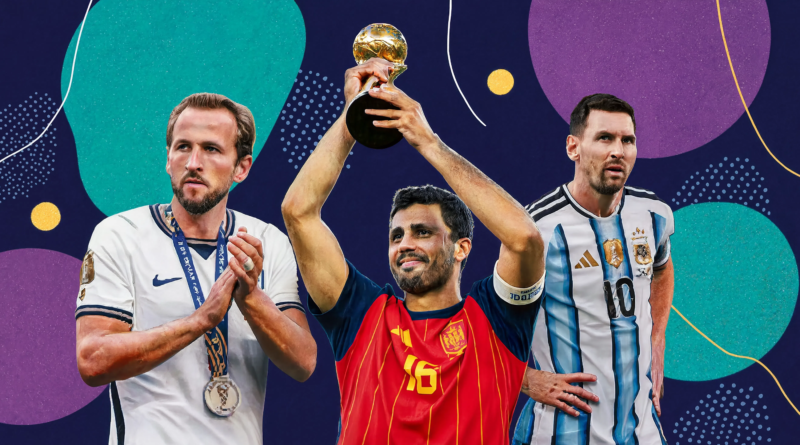
World Cup Final 2026: Spain Beat Argentina to Win Historic Title
World Cup Final 2026: Spain Crowned World Champions After Epic Victory Over Argentina
The World Cup Final 2026 delivered everything football fans hoped for—drama, tactical battles, emotional farewells, and a new champion. Inside a packed stadium watched by millions worldwide, Spain defeated Argentina to lift the FIFA World Cup trophy for the first time since 2010, ending one of the greatest tournaments in modern football history.
For Spain, the victory marked the culmination of years of rebuilding under Luis de la Fuente. A fearless generation led by Lamine Yamal, Pedri, Rodri, Nico Williams, and Pau Cubarsí proved they belonged on football’s biggest stage. Their disciplined possession football, relentless pressing, and maturity under pressure ultimately overwhelmed the defending champions.
For Argentina, the defeat carried a different emotion. It was another unforgettable chapter in Lionel Messi’s legendary World Cup story. Whether this proves to be his final appearance on football’s biggest stage remains uncertain, but the image of Messi embracing teammates after the final whistle instantly became one of the defining moments of the World Cup Final 2026.
Beyond the result, the tournament reshaped football’s landscape. Spain emerged as the sport’s new benchmark, several young stars announced themselves to the world, and questions surrounding England’s disappointing campaign only intensified. The World Cup Final 2026 was more than a championship match—it marked the beginning of a new era.
Table of Contents
World Cup Final 2026 – How Spain Won the World Cup 2026
Spain entered the tournament unbeaten in nearly two years, but few expected them to dominate the knockout rounds with such confidence. From the opening group-stage fixtures to the final whistle against Argentina, La Roja consistently played the tournament’s most complete football.
Their success wasn’t built on individual brilliance alone. Instead, it was the perfect blend of technical quality, tactical discipline, and fearless youth.
Manager Luis de la Fuente trusted a squad that balanced experienced leaders with emerging superstars. While Rodri controlled matches from midfield, teenagers like Lamine Yamal played with remarkable composure far beyond their years.
Against Argentina, Spain immediately imposed their trademark style.
Instead of sitting back against the defending champions, Spain pressed aggressively from the opening whistle. Their midfield triangle suffocated Argentina’s passing lanes, forcing Lionel Scaloni’s side into rushed decisions and long balls they rarely attempted throughout the tournament.
Rodri dictated the tempo with remarkable calmness. Every attack seemed to begin at his feet before flowing through Pedri’s intelligent movement between the lines.
Whenever Argentina attempted to press, Spain escaped effortlessly with quick one-touch combinations that showcased why many already consider this generation the nation’s finest since the golden era of Xavi and Andrés Iniesta.
Tactical Masterclass from Luis de la Fuente
Much of Spain’s triumph came down to preparation.
Rather than relying on endless possession for its own sake, Spain used the ball with purpose. Every passing sequence stretched Argentina’s defensive shape before exploiting the space left behind.
The full-backs pushed high to pin Argentina’s wingers deep, allowing Nico Williams and Lamine Yamal to isolate defenders in one-on-one situations.
This tactical flexibility became Spain’s greatest weapon throughout the tournament.
Whenever Argentina tried to close central areas, Spain attacked down the wings.
When the flanks became crowded, Pedri drifted inside to create numerical superiority in midfield.
The constant rotations left Argentina chasing shadows for long periods.
The Goal That Changed Everything
After a tense opening period filled with half-chances, Spain finally found the breakthrough.
A swift passing move sliced through Argentina’s midfield before reaching Ferran Torres, who timed his run perfectly behind the defensive line.
His composed finish into the far corner sparked wild celebrations among the Spanish supporters.
The goal reflected everything Spain had produced throughout the tournament:
- Intelligent movement
- Quick passing combinations
- Clinical finishing
- Total confidence under pressure
Rather than retreating after taking the lead, Spain continued attacking.
That mentality prevented Argentina from building sustained momentum and ensured the European champions remained in complete control for most of the contest.
Spain’s Young Generation Announces Itself
Perhaps the greatest takeaway from the World Cup Final 2026 wasn’t simply that Spain won.
It was how young this squad truly is.
Lamine Yamal continued his astonishing rise with another fearless performance on football’s biggest stage. Every time he received possession, defenders backed away, uncertain whether he would dribble inside, sprint down the touchline, or produce another inch-perfect cross.
Behind him, Pau Cubarsí looked every bit like a future defensive leader.
Facing one of football’s greatest attacks, the teenage centre-back displayed composure that belied his age. His positioning, anticipation, and passing out from the back highlighted why many analysts already compare him to Spain’s legendary defenders.
Pedri once again reminded the football world why he remains one of the game’s smartest midfielders. His movement between the lines constantly created passing options, while Rodri’s leadership allowed the younger players to express themselves without fear.
This wasn’t merely a tournament victory.
It felt like the beginning of another Spanish dynasty.
Why Spain Were the Best Team at the World Cup 2026
The World Cup Final 2026 confirmed what many observers had believed throughout the tournament—Spain were simply the best side from start to finish.
Unlike several traditional favourites who relied on moments of individual brilliance, Spain consistently controlled matches through structure, patience, and collective intelligence.
Across the tournament, they dominated possession, conceded remarkably few chances, and adapted their approach depending on the opposition. Whether facing high-pressing teams or deep defensive blocks, Luis de la Fuente’s side always found solutions.
Several factors separated Spain from the rest of the field:
- Rodri’s control in midfield, allowing Spain to dictate the rhythm of every match.
- Lamine Yamal’s creativity, providing unpredictability in the final third.
- Pau Cubarsí’s defensive composure, despite his young age.
- Pedri’s intelligence between the lines, constantly unlocking compact defences.
- An elite pressing system that won possession high up the pitch and limited opponents’ counterattacks.
Most importantly, Spain looked like a team rather than a collection of stars. Every player understood their role, every movement had purpose, and every tactical adjustment reflected meticulous preparation.
By the time the final whistle blew, there was little doubt that Spain had earned their place as world champions.
Messi’s GOAT Debate — Where the World Cup Final 2026 Leaves It
No storyline carried more emotional weight into the World Cup Final 2026 than Lionel Messi’s pursuit of one final triumph. Already a World Cup winner, an eight-time Ballon d’Or recipient, and widely regarded as one of the greatest players in football history, Messi entered the final with nothing left to prove. Yet the prospect of ending his World Cup career with back-to-back titles would have added another remarkable chapter to an already legendary legacy.
Instead, football reminded everyone of its unforgiving nature.
Argentina fought until the final whistle, but Spain’s organization and relentless intensity left little room for Messi to influence the game as he had throughout the tournament.
Spain’s Tactical Plan Neutralized Messi
Luis de la Fuente built Spain’s game plan around one clear objective: limit Messi’s time and space between the lines.
Rather than assigning a single man-marker, Spain defended collectively. Rodri screened the defense, Pedri tracked midfield runners, and Pau Cubarsí stepped out confidently whenever Messi dropped deep to receive possession.
The result was one of the quietest finals of Messi’s World Cup career.
Every time he found a pocket of space, two or three Spanish shirts quickly surrounded him. Forced to drift wider than usual, Messi struggled to combine with Julián Álvarez and Argentina’s attacking midfielders.
That tactical discipline summed up Spain’s tournament. They respected Messi’s brilliance without allowing him to dictate the match.
A Legacy That Doesn’t Need Another Trophy
As the final whistle sounded, television cameras focused on Messi standing alone near the center circle before embracing his teammates and applauding the Argentina supporters.
It was a powerful image.
Winning or losing this final was never going to define his career.
Messi’s World Cup résumé already stands among the greatest in football history:
- World Cup champion
- Multiple World Cup final appearances
- Tournament MVP performances
- Dozens of World Cup goal contributions
- Countless unforgettable moments across five World Cups
The World Cup Final 2026 may have ended in defeat, but it also highlighted the respect Messi commands across the football world. Spanish players embraced him after the match, while supporters from both nations applauded as he left the pitch.
The GOAT debate will continue—as it always has—but this final is unlikely to change many minds. For some, Messi’s creativity, consistency, and longevity make him football’s greatest player. Others will continue to favor legends from different eras.
What remains beyond debate is his impact on the sport.
Messi Argentina Final Reaction — Pride Despite Heartbreak
Argentina’s dressing room reflected disappointment rather than devastation.
Having entered the tournament as defending champions, expectations were enormous. Falling one step short inevitably hurt, but players and staff acknowledged Spain had been the better team on the night.
Captain Lionel Messi reportedly urged his teammates to keep their heads high, reminding them of everything the squad had achieved over the past several years.
The emotional scenes after the match demonstrated the unity that has defined Argentina throughout this successful era.
Supporters remained in the stadium long after the trophy presentation, applauding the players who had delivered unforgettable memories across consecutive World Cups.
For many fans, reaching another final was itself a remarkable achievement.
Argentina Can Still Build for the Future
Although much attention centered on Messi, Argentina’s tournament also highlighted the next generation.
Julián Álvarez continued to show why he is among the world’s most complete forwards, while Enzo Fernández remained influential throughout the competition despite a difficult end to the tournament.
Young defenders and midfielders gained valuable experience that should benefit Argentina for years to come.
If this truly proves to be Messi’s final World Cup, Argentina’s rebuilding process begins with a strong foundation already in place.
Tuchel’s Flop — What Went Wrong for England?
While Spain celebrated and Argentina reflected on another memorable campaign, England returned home facing uncomfortable questions.
Before the tournament, many pundits viewed the Three Lions as genuine contenders. Their squad featured elite talent across every position, from Jude Bellingham and Bukayo Saka to Harry Kane and Declan Rice.
Yet England once again failed to translate potential into silverware.
Their elimination reignited debate over Thomas Tuchel’s England future, with supporters and former players questioning whether the team ever found a clear identity.
Tactical Uncertainty Cost England
England’s biggest problem wasn’t a lack of quality.
It was inconsistency.
Throughout the tournament, England alternated between cautious defensive football and aggressive attacking spells without ever establishing a recognizable style.
Against elite opponents, the midfield often struggled to control possession, placing unnecessary pressure on the back line.
The attacking players, meanwhile, frequently looked isolated.
Bukayo Saka produced moments of brilliance on the right wing, but England rarely sustained pressure long enough to capitalize on those opportunities.
Harry Kane dropped deeper in search of possession, leaving the penalty area underoccupied during crucial moments.
The balance simply never looked right.
Expectations vs. Reality
England entered the competition believing they had one of the strongest squads in international football.
Instead, they exited with more questions than answers.
Critics pointed to several recurring issues:
- Slow build-up play against organized defenses.
- Limited creativity through central midfield.
- Overreliance on individual brilliance.
- Inconsistent pressing structure.
- Defensive lapses during transitions.
Those shortcomings ultimately separated England from tournament winners Spain, whose tactical identity remained clear from the opening match through the final.
What Happens Next?
Attention now turns toward the Football Association and the future of the national team.
Will Tuchel receive another opportunity to build toward the next major tournament, or will England seek a new direction?
Names such as Pep Guardiola have already emerged in media speculation, though no decisions have been confirmed.
Regardless of who leads England moving forward, one reality is difficult to ignore:
With the quality available in the squad, simply reaching the latter stages of tournaments is no longer enough.
Supporters expect trophies.
Key Moments and Turning Points of the World Cup Final 2026
Every World Cup has defining moments that shape its legacy, and the World Cup Final 2026 was no exception.
Several key incidents proved decisive:
Ferran Torres Breaks the Deadlock
Spain’s opening goal rewarded their dominance and forced Argentina to abandon their patient game plan.
It shifted the momentum permanently.
Rodri Controlled the Midfield Battle
While forwards often receive the headlines, Rodri’s composure under pressure allowed Spain to dictate the rhythm from start to finish.
His performance may be remembered as one of the finest midfield displays in a World Cup final.
Pau Cubarsí’s Defensive Maturity
Facing one of football’s greatest attacking teams, the young defender played with remarkable confidence.
His positioning and decision-making frustrated Argentina throughout the match.
Spain’s Press Never Stopped
Even after taking the lead, Spain refused to sit back.
Their relentless pressing denied Argentina sustained possession and prevented any meaningful late comeback.
By the end of the evening, Spain had not only won the trophy—they had demonstrated why they were the standout team of the tournament.
A New World Order After the World Cup Final 2026
The World Cup Final 2026 will be remembered as more than the match that crowned a new champion. It symbolized a changing of the guard in international football.
Spain reclaimed football’s biggest prize by staying true to an identity built on intelligent possession, relentless pressing, and fearless youth. Rather than relying on moments of individual brilliance, Luis de la Fuente’s side won through collective excellence. From Rodri’s command in midfield to Lamine Yamal’s creativity and Pau Cubarsí’s composure at the back, Spain looked like a team capable of dominating international football for years to come.
For Argentina, the defeat was painful but not defining. Lionel Messi’s legacy had already been secured long before the final whistle. Another World Cup trophy would have been a remarkable addition, but one defeat cannot erase two decades of extraordinary achievements. If this was indeed Messi’s final World Cup appearance, he leaves the international stage having inspired an entire generation and rewritten football history.
Elsewhere, the tournament exposed weaknesses among several traditional powers. England’s early exit intensified scrutiny of Thomas Tuchel, while other heavyweights were left questioning tactical decisions, squad balance, and long-term planning.
As supporters look ahead to the next World Cup cycle, one conclusion stands above all others:
The World Cup Final 2026 didn’t just produce a champion—it introduced football’s next great era.
Whether Spain can build a dynasty, whether Argentina can successfully transition beyond Messi, and whether England can finally fulfill their enormous potential will shape international football over the coming years.
For now, though, the story belongs to Spain. Their players, coaching staff, and supporters have earned a place in football history with a tournament campaign that combined flair, discipline, and remarkable consistency.
Who won the World Cup Final 2026?
Spain defeated Argentina in the World Cup Final 2026 to become FIFA World Cup champions, ending a superb tournament with a composed and tactically disciplined performance.
How did Spain win the World Cup 2026?
Spain won through a combination of dominant possession, high pressing, intelligent tactical adjustments, and standout performances from players such as Rodri, Lamine Yamal, Pedri, Ferran Torres, and Pau Cubarsí.
Was this Lionel Messi’s last World Cup?
While Messi has not officially confirmed his international future, the World Cup Final 2026 is widely expected to be his final FIFA World Cup appearance due to his age and the four-year gap until the next tournament.
Why did England disappoint at the 2026 World Cup?
England struggled to establish a consistent tactical identity under Thomas Tuchel. Despite possessing one of the tournament’s strongest squads, inconsistent performances and limited attacking cohesion contributed to their elimination.
Who was the standout player of the World Cup Final 2026?
Rodri’s control in midfield, Ferran Torres’ decisive goal, and Lamine Yamal’s creativity were among the standout performances, while Pau Cubarsí delivered an outstanding defensive display against Argentina.