
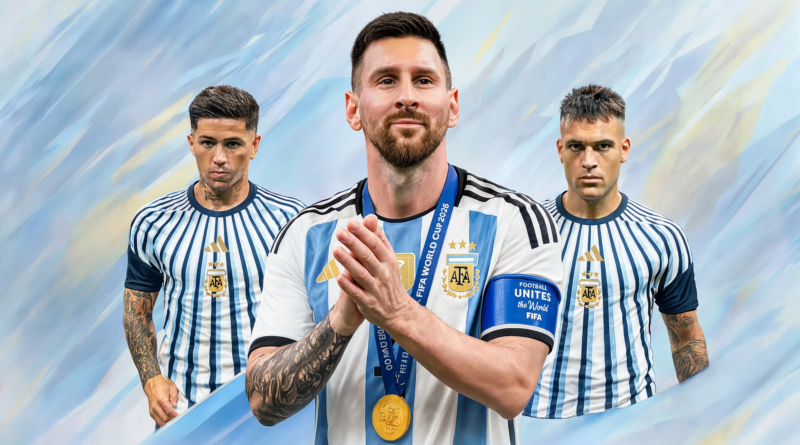
Is the 2026 Really Messi’s Last World Cup? The Trending Question
Is This Really Messi’s Last World Cup? The Impossible Question
For nearly two decades, football’s biggest stage has belonged to Lionel Messi.
Every World Cup has told a different chapter of his story—from the wide-eyed teenager in Germany in 2006 to the captain who finally lifted the trophy in Qatar in 2022. Now, after another unforgettable campaign in 2026, football finds itself asking a question few supporters truly want to answer:
Is this really Messi’s last World Cup?
The question feels almost impossible because Messi has spent so long redefining expectations. Every time the football world predicted the end, he found another way to surprise us. He extended his peak, reinvented his game, and continued producing moments of brilliance against opponents nearly half his age.
Yet time remains undefeated.
Following Argentina’s defeat in the World Cup Final 2026, emotions ran high—not simply because a trophy slipped away, but because millions of fans sensed they might have witnessed Lionel Messi’s final appearance on football’s grandest stage.
As the final whistle echoed around the stadium, one question began circulating among fans, pundits, and former players alike: is this really Messi’s last World Cup? Argentina’s emotional defeat to Spain was heartbreaking, but the result quickly became secondary to the uncertainty surrounding Lionel Messi’s international future. At 39, he remains capable of moments of extraordinary brilliance, yet the physical demands of another four-year World Cup cycle are impossible to ignore.
Whether he decides to continue wearing Argentina’s famous sky-blue shirt or quietly brings an extraordinary journey to an end, is this really Messi’s last World Cup has become the defining question of football’s post-2026 era.
Millions of supporters around the world hope the answer is no, but if is this really Messi’s last World Cup is finally answered with a farewell, the sport will be saying goodbye to one of its greatest icons.
“Some players win trophies. Others change football forever. Messi somehow managed to do both.”
Table of Contents
A Career by the Numbers
Statistics alone can never capture Lionel Messi’s genius.
The way he glides past defenders, spots passes that nobody else can see, or controls the tempo of an entire match cannot be measured by numbers alone. Even so, the figures behind his World Cup journey help explain why so many supporters consider him the greatest footballer of all time.
Across five World Cups—and now a sixth appearance in 2026—Messi has built one of the most complete international careers in football history.
He has scored crucial goals in every stage of the competition, delivered unforgettable assists, captained Argentina through triumph and heartbreak, and consistently performed under the immense pressure that comes with wearing one of football’s most iconic shirts.
Unlike many legends whose careers peaked briefly, Messi remained among the world’s best across nearly twenty years.
That extraordinary longevity is perhaps his greatest achievement.
Every World Cup Told a Different Story
One reason Messi’s World Cup legacy feels so unique is that every tournament represented a different phase of his career.
Germany 2006 – The Arrival
The world first caught a glimpse of an extraordinary teenager.
Still surrounded by experienced stars, Messi played without fear. His dribbling immediately stood out, hinting that Argentina possessed a player capable of defining an era.
Few imagined then that he would still be representing his country twenty years later.
South Africa 2010 – Expectations Begin
By 2010, Messi was already considered the world’s best player at club level.
The expectation shifted dramatically.
No longer viewed as an exciting prospect, he became Argentina’s main hope.
Although the tournament ended in disappointment, it marked the beginning of relentless comparisons with Diego Maradona and intensified debates about whether international success would define his legacy.
Brazil 2014 – One Match from Immortality
The 2014 World Cup remains one of the most emotional chapters of Messi’s career.
Argentina reached the final after several heroic performances from their captain.
For a brief moment, football seemed ready to crown him as world champion.
Instead, Germany’s late winner denied Messi the trophy that many believed he needed to silence every remaining critic.
The image of Messi walking past the World Cup trophy became one of football’s most iconic photographs.
Ironically, that heartbreak only made his eventual triumph in Qatar even more meaningful.
“Sometimes the greatest victories only matter because of the heartbreak that came before them.”
Qatar 2022 – The Dream Realized
If 2014 represented heartbreak, Qatar 2022 represented redemption.
Messi produced one of the greatest individual World Cup campaigns in history, leading Argentina to their first title since 1986.
Every knockout match seemed to produce another unforgettable moment.
Goals.
Assists.
Leadership.
Composure.
By the time Argentina lifted the trophy, millions of supporters believed the GOAT debate had finally reached its conclusion.
For Messi himself, the victory seemed to complete football’s greatest unfinished story.
North America 2026 – One Last Dance?
Few expected Messi to remain such an influential figure four years later.
Although no longer capable of sprinting endlessly across ninety minutes, he adapted once again.
Instead of relying solely on acceleration, he dictated games through intelligence, positioning, and vision.
His ability to slow matches down before producing one decisive moment remained almost unmatched.
Argentina’s run to another World Cup Final demonstrated that even at this stage of his career, Messi continued to shape games against the world’s strongest teams.
Yet there were subtle signs that time was beginning to catch up.
He chose his moments more carefully.
He conserved energy.
He relied increasingly on younger teammates to cover ground around him.
Rather than diminishing his greatness, those adaptations showcased another remarkable quality:
Messi never stopped evolving.
More Than Records
Football often measures greatness through goals and trophies.
Messi’s influence extends much further.
Young players across every continent have modeled their game after his.
Coaches have redesigned tactical systems to maximize players with similar profiles.
Entire generations of supporters fell in love with football because of the joy he brought every weekend.
His legacy cannot be reduced to statistics.
It lives in the memories of impossible dribbles, impossible passes, and impossible dreams made real.
For Argentina, Messi became more than a captain.
He became the symbol of perseverance, humility, and excellence.
And that is why the question “Is this really Messi’s last World Cup?” resonates so deeply.
It isn’t simply about retirement.
It’s about saying goodbye to an era that defined modern football.
Before looking ahead to Argentina’s future, one question continues to dominate football discussions: is this really Messi’s last World Cup?
Every interview, every post-match reaction, and every social media debate seems to return to the same uncertainty.
While Messi has yet to make an official announcement, the emotional scenes following the final have convinced many supporters that is this really Messi’s last World Cup is no longer just a headline—it is a genuine possibility.
Until Messi speaks about his future, is this really Messi’s last World Cup will remain one of the biggest unanswered questions in world football.
What Happened in the World Cup Final 2026?
The World Cup Final 2026 was billed as the perfect ending.
On one side stood Spain, the tournament’s most complete team—a young, fearless squad that had dominated opponents with relentless pressing, technical brilliance, and tactical discipline. On the other stood Argentina, the defending champions led by the man who had defined a generation: Lionel Messi.
It wasn’t just a battle for the trophy.
It felt like a contest between football’s future and its greatest living legend.
From the opening whistle, Spain imposed their rhythm. Rodri dictated the tempo from midfield, Pedri constantly found pockets of space, and Lamine Yamal stretched Argentina’s defense with every touch.
Messi searched for opportunities to slow the game down and create moments of magic, but Spain’s collective defending rarely allowed him the time he normally enjoys.
Argentina fought with the resilience that had carried them through so many memorable nights over the past decade, yet every attack demanded enormous effort.
Spain looked fresher.
Sharper.
More cohesive.
When the decisive goal finally arrived, it felt less like a surprise and more like the reward for ninety minutes of controlled dominance.
The final whistle brought contrasting emotions.
Spanish players sprinted toward one another in celebration.
Argentina’s squad stood frozen, trying to process another unforgettable World Cup final—this one ending in heartbreak.
“For Spain, it was the beginning of something special. For Argentina, it felt like the final page of an unforgettable story.”
One Final Performance Worth Remembering
Messi didn’t leave the pitch with the trophy.
He left with something almost as meaningful:
Respect.
Throughout the match, he continued to demand the ball, directing teammates into position and searching for openings against one of the world’s best defensive units.
Even as fatigue became visible, he refused to disappear.
Every touch carried the hope that he might produce one more unforgettable moment.
There would be no dramatic winner.
No fairy-tale ending.
Instead, the crowd witnessed something perhaps even more powerful—a champion accepting defeat with the same grace that had defined his victories.
As Spain’s celebrations unfolded, several opposing players sought out Messi, embracing him before collecting their winners’ medals.
The images quickly spread around the world.
Football had paused to honor one of its greatest artists.
Messi Argentina Final Reaction
Inside Argentina’s dressing room, disappointment filled the air.
Players sat silently, replaying moments from the match in their minds.
Some stared at the floor.
Others embraced teammates.
The pain of losing another World Cup final was obvious, yet so too was the pride.
Few teams in football history have reached consecutive World Cup finals while carrying the weight of defending a global title.
Argentina had done exactly that.
According to those close to the squad, Messi addressed his teammates shortly after the match.
Rather than focusing on the defeat, he reminded them how far they had come together.
From the heartbreak of earlier tournaments to the glory of Qatar and another run to the final in 2026, this group had restored Argentina to the summit of world football.
His message was simple:
Don’t let one result erase years of unforgettable achievements.
That quiet leadership has always separated Messi from many of football’s biggest stars.
He rarely delivers emotional speeches for the cameras.
Instead, he leads through consistency, humility, and trust.
The Fans Never Stopped Singing
Perhaps the most emotional scenes unfolded not on the pitch but in the stands.
Long after Spain had lifted the trophy, thousands of Argentina supporters remained inside the stadium.
They sang.
They applauded.
They waved flags.
When Messi finally walked toward the traveling fans, the applause grew even louder.
It wasn’t the reaction reserved for a player who had lost a final.
It was the farewell supporters give to someone who has spent two decades representing their dreams.
Many fans wondered, is this really Messi’s last World Cup, as Argentina left the field after the final.
Many fans held homemade banners simply reading:
“Gracias, Leo.”
Others wiped away tears as Messi applauded each section of the crowd before disappearing down the tunnel.
Whether it was truly goodbye or simply another chapter remained uncertain.
But everyone present understood they had witnessed something historic.
“Sometimes the loudest applause comes after defeat.”
Enzo Fernández Red Card Explained
One of the most discussed moments surrounding Argentina’s campaign came earlier in the knockout stage, when Enzo Fernández received a controversial red card that sparked debate across the football world.
The dismissal divided fans, pundits, and former players.
Some argued the challenge endangered the opponent and deserved punishment under modern interpretations of the Laws of the Game.
Others believed the decision was harsh, pointing to minimal intent and the high-pressure nature of knockout football.
Regardless of opinion, the incident forced Argentina to adjust tactically during a crucial phase of the tournament.
Without one of their most influential midfielders, Lionel Scaloni reshaped the team to remain competitive.
Several younger players stepped into unfamiliar roles, demonstrating the depth that Argentina had built over recent years.
Although they successfully reached the final, many supporters continue to wonder how different the tournament might have been had Fernández remained available throughout every decisive match.
The debate over is this really Messi’s last World Cup has become part of the broader conversation surrounding Argentina’s 2026 campaign—a reminder that World Cups are often shaped as much by small moments as by spectacular goals.
A Team Ready for the Future
Despite the disappointment of the final, Argentina left North America with reasons for optimism.
Julián Álvarez once again proved he can lead the attack on football’s biggest stage.
Alexis Mac Allister continued to provide intelligence and balance in midfield.
Cristian Romero remained a commanding presence at the back.
Perhaps most encouragingly, several emerging talents gained invaluable experience under the guidance of Messi and the tournament’s senior leaders.
Their development may become one of the lasting legacies of this generation.
Whenever Messi eventually steps away, Argentina will not be starting from zero.
They will be building upon foundations he helped create.
The End of One Era… or the Beginning of Another?
Every football generation eventually faces the same difficult moment.
Supporters must imagine their national team without the player who defined an era.
For Argentina, it is that is this really Messi’s last World Cup.
His influence stretches far beyond goals or assists.
He changed expectations.
He changed belief.
He transformed Argentina from perennial contenders into world champions.
Now the challenge becomes preserving that winning culture.
The next generation has the talent.
What they must now discover is whether they possess the resilience, leadership, and consistency that Messi embodied for nearly twenty years.
Because replacing a footballer is possible.
Replacing a legend never is.
Is the GOAT Debate Really Settled?
The question has fueled football conversations for nearly two decades.
Who is the greatest player of all time?
For some, the answer has always been Lionel Messi. For others, the debate includes icons such as Cristiano Ronaldo, Diego Maradona, Pelé, Johan Cruyff, and other legends whose influence transcended generations.
The World Cup Final 2026 did not end that discussion—but it reinforced why Messi remains at the center of it.
Greatness Is More Than Trophies
Football often reduces greatness to medals and records.
Those achievements matter, but they are only part of the story.
Messi’s greatest strength has always been his ability to make the extraordinary look routine. A perfectly weighted pass, a dribble through three defenders, or a decisive goal in a high-pressure match became expected because he produced them so consistently.
His influence can be measured in many ways:
- Inspiring a generation of young footballers.
- Redefining the role of the modern playmaker.
- Maintaining world-class standards for nearly two decades.
- Delivering unforgettable performances in club and international football.
Whether someone believes Messi is the greatest player ever or prefers another legend, his place among football’s all-time elite is beyond dispute.
Why the Debate Will Never Truly End
Every era has different challenges.
Pelé dominated in one generation.
Maradona inspired another.
Cristiano Ronaldo redefined longevity and goalscoring.
Messi combined vision, creativity, leadership, and consistency in a way rarely seen before.
Comparing players across different eras is almost impossible. Changes in tactics, sports science, fitness, and the overall pace of the game make direct comparisons difficult.
Perhaps that is why the GOAT debate continues to fascinate fans around the world.
Rather than searching for a definitive answer, football supporters may be better served appreciating the unique greatness each legend brought to the game.
Messi’s story is not simply about records.
It is about imagination.
About joy.
About making millions believe that football could still surprise them.
“Maybe the greatest debate in football doesn’t need a winner. Maybe it simply needs players like Messi to remind us why we fell in love with the game.”
What’s Next for Argentina Without Messi?
If the World Cup Final 2026 marked Messi’s last world cup, Argentina now faces one of the biggest transitions in its football history.
The challenge extends far beyond replacing a world-class player.
It means replacing a captain, a leader, and the emotional heartbeat of the national team.
Fortunately for Argentina, the future is brighter than many realize.
A Strong Core Remains
Several experienced players are ready to guide the next generation.
Julián Álvarez has already shown he can deliver on the biggest stages.
Enzo Fernández remains one of the world’s most intelligent midfielders.
Cristian Romero provides leadership and defensive stability.
Alongside them, emerging talents have gained invaluable World Cup experience that should accelerate their development.
The foundation is there.
What Argentina must now build is a new identity—one that respects Messi’s legacy without trying to replicate it.
A Different Style of Football
Messi shaped Argentina’s tactics for years.
Future teams may look very different.
Without a player capable of slowing the game and producing moments of magic at will, Argentina could become a more collective, high-intensity side built around pressing, quick transitions, and positional flexibility.
That evolution is natural.
Every successful football nation eventually reinvents itself.
The key will be ensuring that the standards established during the Messi era remain unchanged.
Final Thoughts
The question “Is this really Messi’s last World Cup?” may never receive the emotional answer supporters want.
Perhaps Messi will continue representing Argentina in selected matches.
Perhaps he will quietly step away from international football in the months ahead.
Whatever decision he makes, his legacy is already secure.
He gave Argentina unforgettable nights.
He inspired millions of children to dream.
He transformed disappointment into triumph by finally lifting the World Cup and then leading his nation to one final appearance on football’s biggest stage.
Football will continue.
New stars will emerge.
New champions will be crowned.
But there will never be another Lionel Messi.
If the World Cup Final 2026 is truly Messi’s last World Cup, it was not a story defined by defeat.
It was the closing chapter of one of the greatest careers the sport has ever witnessed.
And perhaps that is enough.
Whether the answer is yes or no, is this really Messi’s last World Cup has become the defining storyline of the tournament’s aftermath.
Fans around the globe continue searching for clues about his future, while teammates and coaches avoid making predictions.
If is this really Messi’s last World Cup proves to be the final chapter, it will be remembered as the end of one of football’s greatest international careers.
If not, supporters will celebrate another opportunity to watch a legend compete on the world’s biggest stage.
Is the 2026 FIFA World Cup Lionel Messi’s final World Cup?
While no official announcement has confirmed his retirement from World Cups, the 2026 FIFA World Cup is widely expected to be Messi’s final appearance due to his age and the four-year gap before the next tournament.
How many World Cups has Lionel Messi played?
Messi has represented Argentina across multiple FIFA World Cups, making him one of the most experienced players in tournament history and one of its most influential performers.
Did Messi win the FIFA World Cup?
Yes. Messi captained Argentina to World Cup glory in Qatar 2022, completing one of the most celebrated careers in football history.
Who could replace Messi for Argentina?
Players such as Julián Álvarez, Enzo Fernández, Alexis Mac Allister, and other emerging talents are expected to form the core of Argentina’s next generation.
Why is Lionel Messi considered one of football’s greatest players?
Messi’s combination of goals, assists, creativity, longevity, leadership, individual awards, and international success places him among the greatest footballers of all time.