
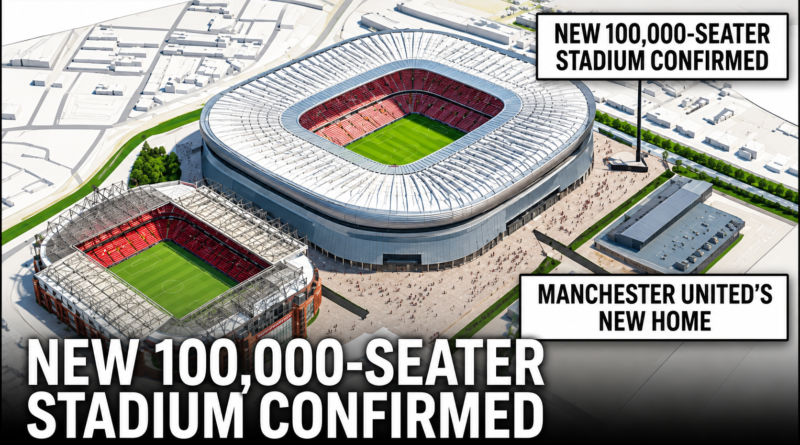
Manchester United New Stadium: How a Modern Home Could Transform the Club
The idea of a Manchester United new stadium has become one of the most significant discussions surrounding the club’s long-term future. As one of the world’s biggest football institutions, Manchester United continues to attract millions of supporters globally, making its stadium more than just a venue—it is a symbol of the club’s identity, history, and ambitions.
For decades, Old Trafford has been known as the “Theatre of Dreams.” It has hosted legendary matches, unforgettable goals, and some of football’s greatest players. However, with stadium technology evolving rapidly and rival clubs investing heavily in modern facilities, conversations about a Manchester United new stadium have become increasingly relevant.
Supporters remain divided. Some believe Old Trafford should be modernized to preserve its history, while others argue that building a completely new stadium would better prepare the club for the future.
In this comprehensive analysis, we’ll explore why Manchester United may consider a new stadium, the potential benefits, financial implications, fan experience, and how such a project could shape the club for decades to come.
Table of Contents
Why Manchester United Are Considering a New Stadium
Football clubs today compete on much more than performances on the pitch.
Modern stadiums generate substantial revenue through hospitality, retail, entertainment, and year-round events. These income streams help clubs invest in players, training facilities, youth academies, and technology.
A Manchester United new stadium would not simply increase seating capacity—it could become one of the most advanced sporting venues in the world.
Several factors continue driving discussions:
- Increasing commercial revenue
- Improved supporter experience
- Modern hospitality facilities
- Better accessibility
- Enhanced sustainability
- Future-proof infrastructure
For a club with Manchester United’s global profile, investing in world-class infrastructure represents more than financial growth—it reflects long-term ambition.
Preserving History While Embracing the Future
One of the biggest challenges surrounding a Manchester United new stadium is balancing innovation with tradition.
Old Trafford is more than a football ground.
It represents generations of memories for supporters who have watched legends such as Sir Bobby Charlton, Eric Cantona, Ryan Giggs, Paul Scholes, Cristiano Ronaldo, and Wayne Rooney create unforgettable moments.
Any future project must respect this extraordinary legacy.
Many supporters believe that architectural features, statues, memorials, and historical exhibits should remain central to any redevelopment or replacement.
Maintaining the emotional connection between fans and the club will be just as important as introducing modern facilities.
A Better Matchday Experience
Football supporters now expect more than ninety minutes of action.
Modern stadiums provide complete entertainment experiences before, during, and after matches.
A Manchester United new stadium could introduce:
- Larger concourses
- Improved seating comfort
- Faster entry systems
- Interactive fan zones
- Expanded club museum
- Family entertainment areas
- Enhanced accessibility for disabled supporters
- Improved food and beverage options
These improvements would make attending matches more enjoyable while encouraging supporters to spend more time at the stadium.
Financial Benefits
A new stadium represents one of the largest investments a football club can make.
However, the long-term financial rewards can be equally significant.
Additional revenue could come from:
- Premium hospitality suites
- Corporate partnerships
- Naming-rights opportunities
- Concerts and major events
- International sporting competitions
- Conferences and exhibitions
These additional income streams would strengthen Manchester United’s financial position and potentially provide greater flexibility in future transfer windows.
For elite clubs competing at the highest level, infrastructure investment has become just as important as player recruitment.
Sustainability and Modern Technology
Today’s stadiums are expected to meet high environmental standards.
A Manchester United new stadium could incorporate sustainable technologies such as:
- Solar energy systems
- Rainwater harvesting
- Energy-efficient lighting
- Smart waste management
- Low-carbon construction materials
Technology could also improve the fan experience through:
- High-speed Wi-Fi
- Digital ticketing
- Cashless payments
- Augmented reality features
- Advanced security systems
These innovations would help future-proof the stadium for generations of supporters.
Economic Impact on Manchester
A Manchester United new stadium would have an impact far beyond football. Large-scale stadium developments often act as catalysts for economic growth, creating new jobs, attracting investment, and boosting tourism.
During construction, thousands of workers could be employed across engineering, architecture, construction, and project management. Once completed, the stadium would continue generating employment through hospitality, security, maintenance, retail, and event management.
Local businesses would also benefit significantly. Restaurants, hotels, cafés, transport services, and retail outlets typically experience increased customer activity on matchdays and during major events. A world-class venue would encourage visitors from around the globe to spend more time—and money—in Manchester.
The economic benefits of a Manchester United new stadium would therefore extend well beyond the club itself, strengthening the city’s position as one of Europe’s leading sporting destinations.
Comparing Manchester United’s Stadium with Europe’s Best
Football stadiums have evolved into multi-purpose entertainment venues. Several of Europe’s biggest clubs have invested heavily in modern infrastructure to improve revenue and the overall fan experience.
Examples include:
- Tottenham Hotspur Stadium
- Santiago Bernabéu
- Allianz Arena
- Wembley Stadium
Each of these venues combines modern architecture with cutting-edge technology, premium hospitality, and year-round commercial activities.
If a Manchester United new stadium is developed, supporters will naturally compare it with these world-class venues. The challenge will be creating a stadium that reflects Manchester United’s history while embracing innovation.
Rather than simply matching competitors, the club has an opportunity to build one of the world’s most iconic football stadiums.
Potential Challenges
While the long-term benefits are substantial, building a new stadium also presents significant challenges.
Financial Investment
Modern football stadiums require billions of pounds in planning, construction, and infrastructure. Funding such a project must be carefully managed to avoid affecting investment in the playing squad.
Protecting Club Heritage
Old Trafford is one of football’s most historic stadiums. Many supporters have emotional connections built over decades of unforgettable matches.
If a Manchester United new stadium replaces Old Trafford entirely, preserving the club’s traditions, memorials, and historical identity will be essential.
Construction Timeline
Large infrastructure projects often take several years to complete. During this period, careful planning is required to minimize disruption for supporters, players, and local residents.
Supporter Expectations
Manchester United supporters expect excellence in every aspect of the club. Any new stadium would need to deliver an outstanding matchday experience while maintaining the atmosphere that has made Old Trafford famous around the world.
Long-Term Vision
A successful Manchester United new stadium would represent more than an architectural achievement.
It would become the centrepiece of the club’s long-term strategy.
Beyond Premier League matches, the venue could host:
- UEFA Champions League finals
- International football matches
- Women’s football tournaments
- Concerts
- Community events
- Esports competitions
- Business conferences
This diversified use would ensure the stadium remains active throughout the year while generating additional revenue that can be reinvested into football operations.
Modern football clubs increasingly rely on sustainable business models, and world-class infrastructure plays an important role in achieving long-term financial stability.
Expert Analysis
From a strategic perspective, investment in infrastructure is just as important as investment in players.
Elite clubs understand that modern facilities improve every aspect of the organization, from commercial partnerships to supporter engagement and player recruitment.
A Manchester United new stadium could strengthen the club in several key areas:
- Higher commercial revenue
- Better supporter experience
- Improved global brand value
- Greater appeal for sponsors
- Enhanced player and staff facilities
The success of the project, however, will depend on balancing innovation with tradition. Manchester United’s history is one of its greatest strengths, and any future stadium should celebrate that legacy while preparing the club for the next generation.
Conclusion
The discussion surrounding a Manchester United new stadium reflects the club’s ambition to remain at the forefront of world football.
Whether through a complete rebuild or a major redevelopment, investing in modern infrastructure could transform Manchester United’s future on and off the pitch.
A new stadium has the potential to improve supporter experiences, increase commercial opportunities, strengthen the local economy, and reinforce the club’s global reputation.
At the same time, preserving the traditions and identity associated with Old Trafford must remain a top priority.
If carefully planned and executed, a Manchester United new stadium could become one of football’s greatest venues—a stadium that honours the past while inspiring future generations of players and supporters.
Why is Manchester United considering a new stadium?
A modern stadium could improve fan experiences, generate additional revenue, enhance sustainability, and support the club’s long-term ambitions.
Would Manchester United leave Old Trafford?
Several options have been discussed over the years, including redevelopment and the possibility of building a new stadium. Any final decision would depend on long-term planning and feasibility.
How could a new stadium benefit supporters?
Supporters could enjoy improved seating, better accessibility, enhanced hospitality, modern technology, and expanded entertainment facilities.
Would a new stadium help Manchester United financially?
Yes. Increased hospitality, commercial events, sponsorship opportunities, and higher matchday revenue could strengthen the club’s financial position.
What should be preserved in a new Manchester United stadium?
Many supporters believe the club’s history, memorials, statues, traditions, and the famous Old Trafford atmosphere should remain central to any future development.