
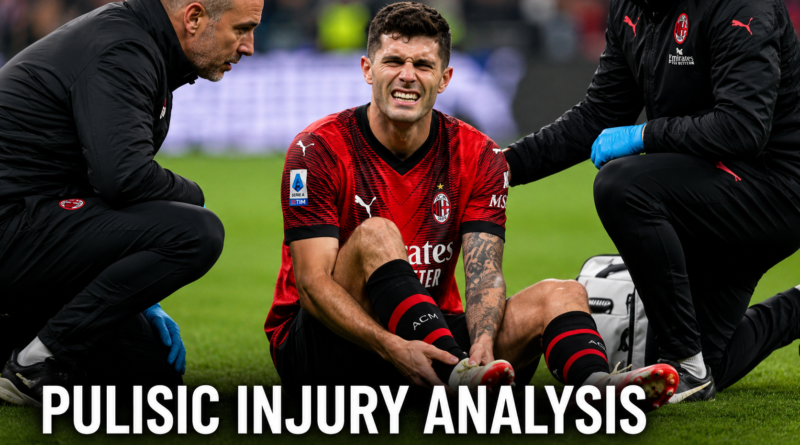
Christian Pulisic Injury: Complete Analysis of the Impact on USMNT and AC Milan
Christian Pulisic Injury: Complete Analysis of the Impact on USMNT and AC Milan
A Christian Pulisic injury is one of the biggest concerns for both the United States Men’s National Team (USMNT) and AC Milan whenever the American star is unavailable. As one of the most influential players in North American football, Pulisic has become the creative heartbeat of every team he represents. His pace, dribbling ability, intelligent movement, and leadership make him indispensable in high-pressure matches.
Whether the injury is a minor muscle issue or something more serious, its impact extends far beyond one player missing a few games. A Christian Pulisic injury affects tactical planning, squad selection, attacking creativity, and even the confidence of teammates. For clubs and national teams competing at the highest level, losing a player of his quality can completely change the outcome of a season or tournament.
In this article, we examine the potential consequences of a Christian Pulisic injury, how teams adapt without him, possible recovery timelines, and why managing his fitness has become one of the biggest priorities for both club and country.
Table of Contents
Why Christian Pulisic Is So Important
Few American footballers have carried expectations like Christian Pulisic. Since making his breakthrough in Europe, he has consistently performed at the highest level while representing the growth of American football on the global stage.
For the USMNT, Pulisic is much more than a winger. He is often the player responsible for progressing the ball through midfield, creating chances in the final third, and scoring crucial goals during major tournaments.
His influence goes beyond statistics. Defenders frequently double-mark him, creating more space for teammates. His ability to attract defensive attention changes how opponents approach every match.
At club level, Pulisic has also developed into a versatile attacker capable of playing on either wing, behind the striker, or even as an advanced playmaker when tactical adjustments require greater creativity.
Because of these qualities, a Christian Pulisic injury affects every phase of a team’s attacking structure.
Understanding the Impact of a Christian Pulisic Injury
Whenever Pulisic misses matches, coaches immediately face difficult tactical decisions. Replacing his technical quality is challenging, but replacing his leadership is arguably even harder.
His biggest strengths include:
- Exceptional acceleration over short distances
- Intelligent movement between defensive lines
- Creative passing in tight spaces
- Clinical finishing in transition
- High defensive work rate
These qualities allow managers to build attacking systems around him. Without Pulisic, teams often become more predictable and easier to defend.
A Christian Pulisic injury can also force managers to change formations. Instead of relying on wide attacking play, teams may choose to strengthen midfield or adopt a more direct approach to compensate for the loss of creativity.
Tactical Challenges for the USMNT
The United States have become increasingly competitive on the international stage, but much of their attacking identity revolves around Pulisic’s ability to create chances.
Without him, the USMNT often struggle in three key areas:
1. Chance Creation
Pulisic consistently ranks among the team’s leaders in progressive carries, key passes, and successful dribbles. His absence reduces the number of high-quality opportunities created during matches.
2. Leadership
As one of the squad’s senior players, Pulisic provides confidence in difficult moments. Younger teammates naturally look toward him when the pressure increases during knockout football.
3. Transition Play
The USMNT are at their most dangerous when attacking quickly after winning possession. Pulisic’s speed allows the team to counterattack efficiently, stretching opposing defenses before they can recover.
When a Christian Pulisic injury removes that outlet, opponents can press higher up the pitch with greater confidence.
Who Could Replace Him?
No player can fully replicate Pulisic’s complete skill set, but several options can help reduce the impact.
Potential replacements include:
- Tim Weah – Offers pace and direct running on the wing.
- Gio Reyna – Provides creativity and technical quality between the lines.
- Yunus Musah – Can help control possession by strengthening midfield.
- Brenden Aaronson – Adds energy, pressing intensity, and tactical flexibility.
Rather than expecting one player to replace Pulisic entirely, coaches often distribute responsibilities across multiple players.
Why Injury Management Matters
Modern football places enormous physical demands on attacking players. Club competitions, international tournaments, and frequent travel leave very little recovery time.
Managing workloads through sports science, recovery programs, and careful rotation has become essential.
Preventing a Christian Pulisic injury is often more valuable than rushing him back too early. A fully fit Pulisic provides significantly greater long-term value than risking repeated setbacks through premature returns.
Impact on AC Milan
A Christian Pulisic injury would not only affect the United States Men’s National Team but also create significant challenges for AC Milan. Since arriving in Serie A, Pulisic has become one of Milan’s most consistent attacking players, contributing goals, assists, and intelligent movement in the final third.
Modern football demands versatility, and Pulisic provides exactly that. He can operate on either wing, play as an attacking midfielder, or support the striker depending on the tactical setup. Losing such a flexible player forces the coaching staff to rethink both their formation and attacking strategy.
Without Pulisic, AC Milan may need to rely more heavily on squad rotation or adjust their attacking patterns. Rather than building attacks through quick transitions and wide play, they may focus on patient possession or central combinations. While Milan have talented replacements, few players offer the same combination of pace, creativity, and decision-making that Pulisic brings to the pitch.
Another important factor is leadership. Although not always the captain, Pulisic has developed into an experienced professional capable of influencing younger teammates during high-pressure matches. His presence often provides calmness in difficult moments, making any Christian Pulisic injury a challenge beyond simply replacing his technical abilities.
Recovery Timeline and Rehabilitation
Every injury is different, meaning recovery depends on its severity, the affected muscle or joint, and the player’s overall physical condition.
Medical teams generally divide rehabilitation into several stages:
Phase 1: Assessment
Doctors perform scans and physical examinations to determine the exact nature of the injury. A precise diagnosis helps create an effective recovery plan.
Phase 2: Treatment
This stage focuses on reducing pain and inflammation while protecting the injured area. Depending on the injury, treatment may include physiotherapy, strength work, or controlled mobility exercises.
Phase 3: Return to Training
Once pain-free movement is restored, the player gradually rejoins team training. Coaches carefully monitor workload to reduce the risk of re-injury.
Phase 4: Match Fitness
Returning to competition is often the final step. Players usually require several training sessions before regaining full sharpness and confidence.
Sports scientists consistently emphasize that rushing recovery increases the likelihood of recurring problems. For that reason, both AC Milan and the USMNT would prioritize long-term fitness over short-term availability whenever a Christian Pulisic injury occurs.
Long-Term Career Outlook
Despite occasional setbacks, Christian Pulisic remains one of the most accomplished American footballers of his generation. His technical ability, experience in Europe’s top leagues, and continued development suggest he still has several years of elite football ahead of him.
Modern sports medicine has significantly improved injury management. Many players now return stronger after rehabilitation because recovery programs focus not only on healing but also on improving strength, flexibility, and movement patterns.
For Pulisic, maintaining consistent fitness will be one of the biggest factors in extending his peak years. Smart workload management, regular recovery sessions, and careful scheduling between club and international football can help reduce future injury risks.
A Christian Pulisic injury should therefore be viewed as a temporary challenge rather than a defining moment in his career.
Expert Analysis
From a tactical perspective, Pulisic’s importance extends far beyond goals and assists.
His movement creates space for teammates, his pressing disrupts opposition build-up, and his ability to carry the ball forward allows teams to transition quickly from defense to attack.
Whenever a Christian Pulisic injury sidelines him, coaches often face three major problems:
- Reduced attacking creativity
- Less pace during counterattacks
- Fewer experienced leaders in pressure situations
Replacing those qualities requires collective improvement rather than expecting one individual to perform the same role.
Conclusion
A Christian Pulisic injury always attracts significant attention because of his importance to both club and country. His influence stretches beyond statistics, affecting tactical flexibility, leadership, and overall team confidence.
For the USMNT, his availability can shape performances in major international tournaments. For AC Milan, he remains a key attacking player capable of changing matches through moments of individual brilliance.
Fortunately, advances in sports science continue to improve recovery outcomes, allowing elite footballers to return stronger than ever. As long as workload is managed carefully and rehabilitation is completed properly, there is every reason to believe Pulisic can continue performing at the highest level for years to come.
Regardless of future challenges, Christian Pulisic remains one of the most important figures in American football, and supporters around the world will hope to see him healthy, confident, and making the difference on football’s biggest stages.
What is the most common type of Christian Pulisic injury?
Like many attacking players, Pulisic has experienced muscle-related injuries during his career. Fast acceleration, frequent direction changes, and a demanding match schedule increase the physical stress placed on attacking footballers.
How would a Christian Pulisic injury affect the USMNT?
His absence reduces attacking creativity, leadership, and transition speed. Coaches may need to adjust formations and rely on multiple players to replace his influence.
Who can replace Christian Pulisic?
Tim Weah, Gio Reyna, Brenden Aaronson, and Yunus Musah are among the players capable of sharing attacking responsibilities, although none offer exactly the same skill set.
Can Christian Pulisic return to his best after an injury?
Yes. Modern rehabilitation programs are designed to restore strength, mobility, and match fitness, allowing many elite players to return to top form after injury.
Why is Christian Pulisic so important?
His versatility, creativity, pace, technical ability, and leadership make him one of the most influential players for both AC Milan and the USMNT.