
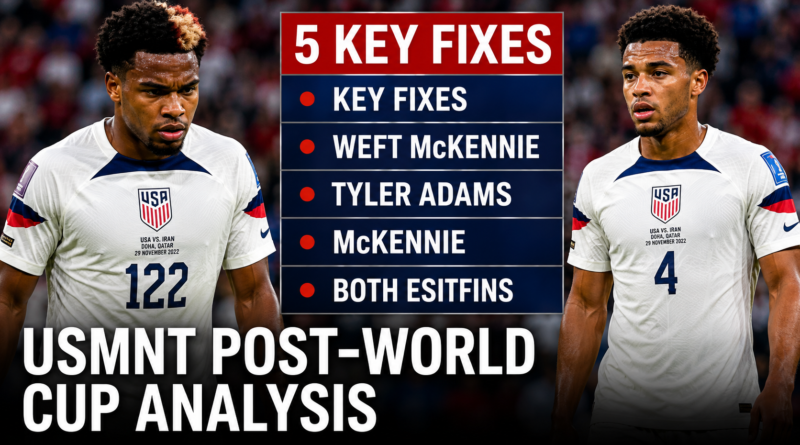
USMNT World Cup Exit Fixes: 5 Changes Needed to Build a Stronger Future
Every FIFA World Cup brings moments of triumph and disappointment. For the United States Men’s National Team, tournament exits often become opportunities for reflection and long-term planning. The discussion surrounding USMNT World Cup exit fixes is not simply about recovering from one disappointing campaign—it is about building a program capable of consistently competing with the world’s strongest football nations.
International football has become increasingly competitive. Traditional powers continue investing heavily in coaching, youth academies, sports science, and player development. Emerging nations are also improving rapidly, making it essential for every national team to evolve continuously.
The conversation around USMNT World Cup exit fixes focuses on strengthening every aspect of the program, from tactical flexibility and squad depth to youth development and elite player progression. Rather than searching for quick solutions, sustainable success requires long-term planning and consistent investment.
In this analysis, we’ll examine five key areas that could help the United States continue its footballing development while preparing for future FIFA World Cups.
Table of Contents
Why World Cup Exits Can Be Valuable
Although tournament eliminations are disappointing, they often provide the clearest opportunities for improvement.
Successful national teams regularly analyze performances to identify weaknesses before implementing long-term changes.
Major tournament reviews can help improve:
- Tactical organization
- Player development
- Squad depth
- Coaching structures
- Competitive mentality
The objective of these USMNT World Cup exit fixes is not simply to recover from defeat but to build a stronger foundation for future international success.
Fix 1: Improve Tactical Flexibility
Modern international football demands adaptability.
Teams rarely succeed using only one tactical system throughout an entire tournament.
The United States should continue developing multiple tactical approaches capable of responding to different opponents and match situations.
Key improvements include:
- Alternative formations
- Flexible pressing structures
- Better game management
- Improved defensive transitions
- Stronger attacking combinations
Greater tactical versatility would allow the team to compete more effectively against both possession-based and counterattacking opponents.
Implementing these tactical improvements remains one of the most important USMNT World Cup exit fixes.
Fix 2: Continue Developing Elite Players
The foundation of every successful national team is player quality.
While the United States has produced more players competing in Europe’s top leagues than ever before, continued development remains essential.
Priority areas include:
- Technical development
- Decision-making under pressure
- Leadership
- Match experience
- Tactical intelligence
Encouraging more players to compete regularly at the highest club level will strengthen the national team over the long term.
Fix 3: Strengthen Midfield Control
Many international matches are decided in midfield.
Teams capable of controlling possession while resisting opposition pressure often dictate the tempo of important games.
The United States can improve by developing midfielders who combine:
- Progressive passing
- Defensive awareness
- Ball retention
- Creativity
- Positional discipline
This remains another important component of the overall USMNT World Cup exit fixes strategy.
Fix 4: Improve Final-Third Efficiency
Creating scoring opportunities is only part of winning football matches.
Elite teams consistently convert chances during high-pressure moments.
Future development should emphasize:
- Clinical finishing
- Intelligent movement
- Combination play
- Crossing accuracy
- Decision-making around the penalty area
Improving attacking efficiency would significantly increase the team’s competitiveness against elite opposition.
Fix 5: Invest in Youth Development
Long-term success begins well before players reach the senior national team.
Continued investment in youth academies, coaching education, sports science, and competitive pathways will strengthen the entire football ecosystem.
Priority areas include:
- Academy coaching
- Talent identification
- Sports science
- Competitive youth leagues
- International tournament experience
These investments ensure the USMNT World Cup exit fixes extend beyond one generation and support sustained success for years to come.
Coaching Evolution
One of the most important USMNT World Cup exit fixes is ensuring the coaching structure continues to evolve alongside the players. Modern international football requires managers who can adapt tactically, communicate effectively, and maximize the strengths of an increasingly diverse squad.
An elite coaching staff should focus on:
- Tactical flexibility
- Match-specific game plans
- In-game adjustments
- Individual player development
- Sports science integration
International tournaments are often decided by small tactical details. Coaches who can make effective substitutions, adjust formations during matches, and prepare players for different opponents provide a significant competitive advantage.
Developing a modern coaching structure remains one of the most sustainable USMNT World Cup exit fixes for future tournaments.
Learning from Elite National Teams
The world’s most successful national teams share several common characteristics.
Rather than relying solely on individual talent, they combine technical quality with strong tactical organization and long-term planning.
Several lessons stand out:
Strong Youth Systems
Countries with consistent international success invest heavily in youth academies and coaching education.
Producing technically gifted players from an early age creates a sustainable pipeline for the senior national team.
Clear Football Identity
Elite teams usually follow a recognizable style of play regardless of the age group.
This consistency helps players transition smoothly from youth teams to the senior squad.
Mental Strength
International football places enormous pressure on players.
Developing resilience, leadership, and decision-making under pressure is just as important as improving technical ability.
These lessons should form part of the long-term USMNT World Cup exit fixes strategy.
The Roadmap to Future Success
Improvement in international football requires patience.
Building a squad capable of consistently challenging for major honours cannot happen within a single tournament cycle.
A realistic roadmap could include:
Short-Term Objectives
- Improve tactical flexibility
- Strengthen squad depth
- Increase competition for places
- Develop leadership within the squad
Medium-Term Goals
- Produce more players competing regularly in Europe’s top leagues
- Expand youth development programs
- Improve technical standards across all age groups
Long-Term Vision
- Compete consistently in the latter stages of major tournaments
- Develop a recognizable football identity
- Build sustainable success through player development
These long-term objectives demonstrate that the USMNT World Cup exit fixes extend far beyond immediate results.
Challenges Ahead
Although the United States has made significant progress, several challenges remain.
Increasing Global Competition
More nations are investing in football infrastructure, making international tournaments increasingly competitive.
Balancing Youth and Experience
Young players provide energy and long-term potential, while experienced professionals offer leadership during high-pressure situations.
Finding the right balance remains essential.
Player Availability
International managers work with players only a few times each year.
Building tactical cohesion within limited preparation time is always a challenge.
Maintaining Development Standards
Continued investment in coaching, sports science, and academy systems will determine whether long-term progress continues.
Addressing these challenges is essential if the USMNT World Cup exit fixes are to produce lasting improvements.
Expert Analysis
The USMNT World Cup exit fixes should focus on long-term development rather than short-term reactions.
The United States already possesses a growing pool of talented players competing at increasingly high levels of club football.
The next stage involves improving tactical consistency, strengthening leadership, and creating a footballing identity capable of competing with the world’s elite nations.
One encouraging factor is the country’s continued investment in youth development and professional infrastructure.
If these foundations continue improving, the national team will be better equipped to compete in future FIFA World Cups.
Success should not be measured by one tournament alone but by sustained progress across multiple competition cycles.
Prediction
The USMNT World Cup exit fixes provide a clear roadmap for continued growth.
With ongoing investment in player development, coaching education, tactical innovation, and professional infrastructure, the United States has every opportunity to become a stronger international football nation over the coming decade.
While immediate success is never guaranteed, maintaining a long-term vision will significantly improve the team’s chances of competing consistently against the world’s leading football nations.
Future World Cups should see a more experienced, tactically flexible, and technically accomplished United States squad capable of challenging deeper into the tournament.
Conclusion
The discussion surrounding USMNT World Cup exit fixes is ultimately about building a stronger future rather than dwelling on past disappointments.
International football rewards nations that invest consistently in coaching, youth development, tactical evolution, and player progression.
By improving tactical flexibility, developing elite players, strengthening midfield control, increasing attacking efficiency, and continuing to invest in youth systems, the United States can establish a sustainable platform for long-term success.
The journey toward becoming a genuine World Cup contender requires patience, intelligent planning, and continuous improvement. If these USMNT World Cup exit fixes are implemented effectively, future generations of American footballers will be better prepared to compete on the biggest stage in world football.